
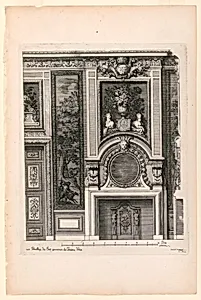
Plate in Nouvelles Cheminée faittes en plusieur en droits (New Designs for Fireplaces)
Medium
architecture
Classification
architecture
Department
Smithsonian Collection
Museum
Smithsonian American Art Museum
Credit
Museum purchase from General Acquisitions Endowment Fund
Accession Number
1988-4-50
Rights
Public Domain
About this artwork
Research in Progress
Art Historical Context
Daniel Marot's *Plate in Nouvelles Cheées faittes en plusieurs endroits* (New Designs for Fire), created around 1700, showcases the artist's innovative architectural designs for ornate fireplaces. Born in France in 1661, Marot was active in the Netherlands and England where he flourished as a versatile designer amid the opulent courts of William and Mary. This engraved plate, classified as architecture, exemplifies the period's fascination with grandeur in domestic interiors, serving as a blueprint for elegant chimneypieces that blended functionality with lavish decoration. As a master engraver and architect, Marot contributed to the dissemination of Baroque-influenced styles across Europe through printed folios like this one. These pattern books were essential tools for builders and patrons, standardizing sophisticated motifs—think scrolling acanthus leaves, mythological figures, and gilded mantels—that defined early 18th-century luxury. Housed in the Smithsonian American Art Museum's Smithsonian Collection (purchased via the General Acquisitions Endowment Fund), this work highlights the cross-cultural exchange of design ideas during Marot's era, bridging French Huguenot refinement with Anglo-Dutch tastes. Though research continues, this plate invites us to envision hearths as statement pieces, warming both rooms and the imagination in an age of emerging neoclassical elegance.