
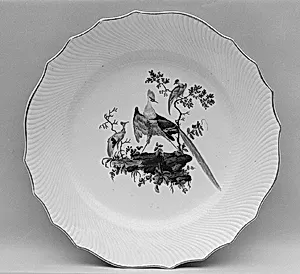
Plate (one of a pair)
ca. 1762–75
Medium
Soft-paste porcelain
Dimensions
Diameter: 9 1/4 in. (23.5 cm)
Classification
Ceramics-Porcelain
Culture
Belgian, Tournai
Department
European Sculpture and Decorative Arts
Museum
Metropolitan Museum of Art, New York, NY
Credit
Bequest of Mary Strong Shattuck, 1935
Accession Number
35.80.78
Rights
Public Domain
Tags
Art Historical Context
This exquisite plate, one of a pair produced in Tournai, Belgium, around 1762–75, exemplifies the height of 18th-century European porcelain. Crafted from soft-paste porcelain—a delicate, translucent material prized for its creamy glow and fine detail—the 9¼-inch diameter dish features charming motifs of birds perched among trees. These naturalistic designs reflect the rococo taste for whimsical, nature-inspired decoration, blending European elegance with subtle chinoiserie influences popular at the time. Tai's porcelain factory, established in the 1750s, was a key player in Europe's race to rival Chinese imports. Using soft-paste formulas derived from French Sèvres techniques, artisans achieved vibrant underglaze colors and intricate gilding, though the material's fragility made each piece a labor of precision. This plate, now in the Metropolitan Museum of Art thanks to the 1935 bequest of Mary Strong Shattuck, highlights Tournai's brief but brilliant output before the factory closed in the 1790s. As a functional yet luxurious tableware item, it offers a window into aristocratic dining culture, where porcelain symbolized refinement and global trade connections. Visitors will appreciate its enduring beauty, a testament to Belgian craftsmanship in the Decorative Arts tradition.