
Classification
ceramics
Department
Smithsonian Collection
Museum
Smithsonian American Art Museum
Credit
Bequest of Erskine Hewitt
Accession Number
1938-57-710-h
Rights
Public Domain
About this artwork
Research in Progress
Art Historical Context
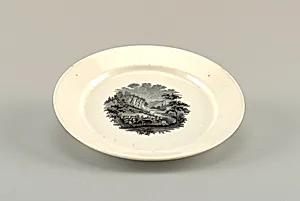
This elegant plate, crafted around 1843 by William Ridgway & Co. of Staffordshire, England, represents the height of British ceramic production during the early Victorian era. The firm was part of the renowned Staffordshire potteries, which supplied affordable yet refined tableware to households across Britain and America. As a piece classified simply as ceramics, it likely reflects the era’s innovative manufacturing techniques that made decorative dishes accessible to a growing middle class. Staffordshire wares like this one played a key role in transatlantic trade, carrying English designs and tastes to American tables. The plate’s presence in the Smithsonian American Art Museum, acquired through the bequest of Erskine Hewitt, underscores its value as both a functional object and a cultural artifact that connects industrial innovation with everyday life in the 1840s. Though research on its specific pattern or decoration continues, the work invites visitors to appreciate how such ceramics bridged continents and social classes, turning ordinary meals into moments of shared aesthetic pleasure.