
Plate (tondino)
Unknown Artist
ca. 1530
Medium
Maiolica (tin-glazed earthenware)
Dimensions
Diam. 11 11/16 in. (29.7 cm)
Classification
Ceramics-Pottery
Culture
Italian, probably Faenza
Department
Robert Lehman Collection
Museum
Metropolitan Museum of Art, New York, NY
Credit
Robert Lehman Collection, 1975
Accession Number
1975.1.1009
Rights
Public Domain
Tags
Art Historical Context
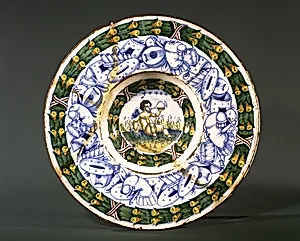
This charming tino, or small round, was crafted around1530 in Faenza a leading center of maiolica production during the Renaissance. Made of tin-glazed earthenware, the medium allowed potters to achieve vibrant colors and a glossy, reflective surface that mimicked expensive imported porcelain. At just under 12 inches in diameter, such plates were popular both for serving food at elegant banquets and as decorative objects in prosperous homes. The lively decoration depicts putti—playful cherubs—surrounded by musical instruments and scenes of drinking. These motifs reflect the period’s humanist interest in classical mythology and the pleasures of everyday life, transforming a functional object into a miniature celebration of music, festivity, and joy. Today in the Metropolitan Museum’s Robert Lehman Collection, the plate offers visitors a vivid glimpse of Renaissance Italy’s artistic refinement and technical innovation in ceramics.