
清康熙 景德鎮窯五彩仙女圖盤一對|Plate with fairies
Unknown Artist
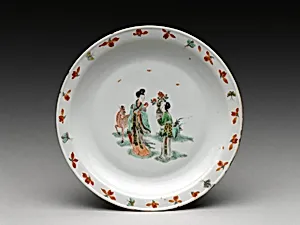
Medium
Porcelain painted with overglaze polychrome enamels (Jingdezhen ware)
Dimensions
Diam. 6 3/4 in. (17.1 cm)
Classification
Ceramics
Culture & Period
China · Qing dynasty (1644–1911), Kangxi period (1662–1722)
Department
Asian Art
Museum
Metropolitan Museum of Art, New York, NY
Credit
Gift of Edwin C. Vogel, 1963
Accession Number
63.213.16
Rights
Public Domain
Tags
Art Historical Context
This exquisite pair of porcelain plates, titled *Plate with Fairies*, hails from the Kangxi period (1662–1722) of China's Qing dynasty, crafted at the renowned Jingdezhen kilns—the epicenter of imperial porcelain production. Measuring 6 3/4 inches in diameter, these dishes feature vibrant overglaze polychrome enamels, a technique known as *wucai* (five colors), where vivid hues of red, green, blue, yellow, and purple are applied atop the fired glaze and refired at lower temperatures. This method allowed for intricate, durable designs that captured mythical scenes of graceful fairies amid animals and human figures, evoking the ethereal beauty of Chinese folklore. Jingdezhen ware during the Kangxi reign represented a pinnacle of ceramic artistry, blending technical innovation with imperial patronage. Emperor Kangxi's era saw unprecedented refinement in porcelain, with motifs drawn from literature and Daoist mythology symbolizing harmony, immortality, and prosperity. These plates, likely used for elite dining or display, showcase the kilns' mastery in balancing delicate forms with dynamic compositions. Now housed in the Metropolitan Museum of Art's Asian Art Department as a 1963 gift from Edwin C. Vogel, this pair invites visitors to marvel at Qing China's porcelain legacy—a testament to craftsmanship that influenced global ceramics for centuries.