
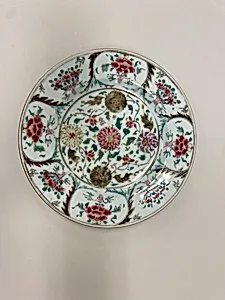
Plate with flowers
Unknown Artist
late 18th century
Medium
Porcelain painted in overglaze polychrome enamels (Jingdezhen ware)
Dimensions
H. 1 1/4 in. (3.2 cm); Diam. 9 7/8 in. (25.1 cm)
Classification
Ceramics
Culture & Period
China · Qing dynasty (1644–1911)
Department
Asian Art
Museum
Metropolitan Museum of Art, New York, NY
Credit
Edward C. Moore Collection, Bequest of Edward C. Moore, 1891
Accession Number
91.1.390
Rights
Public Domain
Tags
Art Historical Context
This delicate porcelain plate, adorned with vibrant flowers, hails from China's Jingdezhen kilns during the late 18th, a peak period of the Qing dynasty (1644–1911). Measuring just 1¼ inches high and nearly 10 inches in diameter, it exemplifies the exquisite craftsmanship of imperial porcelain production centers, renowned worldwide for their technical mastery and export appeal to European markets. Crafted in overglaze polychrome enamels—a technique where colorful pigments are applied to the fired glaze and refired at lower temperatures—this plate achieves its vivid, lasting hues without the risk of cracking the delicate body. Jingdezhen ware like this was prized for its translucency and fine white paste, often featuring floral motifs symbolizing beauty, prosperity, and harmony in Chinese culture. Now part of the Metropolitan Museum of Art's Asian Art collection, gifted through the Edward C. Moore bequest in 1891, this piece invites us to appreciate the Qing era's blend of artistry and innovation, bridging East and West in everyday elegance.