
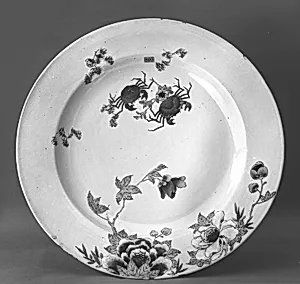
Plate with two crabs and flowers
Unknown Artist
late 18th century
Medium
Porcelain painted in overglaze polychrome enamels (Jingdezhen ware)
Dimensions
Diam. 15 3/8 in. (39.1 cm)
Classification
Ceramics
Culture & Period
China · Qing dynasty (1644–1911), Qianlong period (1736–95)
Department
Asian Art
Museum
Metropolitan Museum of Art, New York, NY
Credit
Purchase by subscription, 1879
Accession Number
79.2.697
Rights
Public Domain
Tags
Art Historical Context
This elegant porcelain plate, dating to the late 18th century during the Qianlong period of China’s Qing dynasty, exemplifies the refined taste of the era. Produced at the renowned Jingdezhen kilns, it features two crabs surrounded by delicate flowers, rendered with naturalistic detail on a circular form measuring just over 15 inches across. Such decorative motifs reflect the period’s appreciation for harmonious depictions of nature, often created for both imperial use and scholarly appreciation. The plate’s medium—porcelain painted in overglaze polychrome enamels—highlights advanced ceramic techniques at Jingdezhen. This method allowed artists to apply vibrant colors after the initial high-temperature firing, achieving rich hues and fine brushwork that captured the texture of crab shells and the softness of petals. During the Qianlong emperor’s reign, porcelain production reached new heights of technical precision and artistic variety, making pieces like this highly valued both in China and abroad. Acquired by the Metropolitan Museum of Art in 1879 through public subscription, the work now resides in the museum’s Asian Art collection. It offers visitors a glimpse into the sophisticated ceramic traditions of Qing-dynasty China, where everyday subjects like crabs and flowers were transformed into enduring symbols of elegance and craftsmanship.