
Plates (2)
Unknown Artist
ca. 1772
Medium
Hard-paste porcelain
Dimensions
Diameter (each): 9 in. (22.9 cm)
Classification
Ceramics-Porcelain-Export
Culture
Chinese, for British market
Department
European Sculpture and Decorative Arts
Museum
Metropolitan Museum of Art, New York, NY
Credit
Gift of George Crawley, 1926
Accession Number
26.111.1, .2
Rights
Public Domain
Tags
Art Historical Context
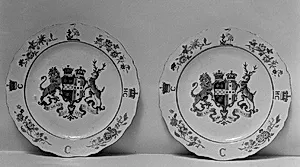
These elegant pair of plates, crafted around 1772 in hard-paste porcelain by an unknown Chinese artist, exemplify exquisite export wares produced for the British market. Measuring 9 inches in diameter, they feature vibrant decorations including birds, deer, lions and a prominent coat of arms—hallmarks of armorial porcelain tailored to European tastes. Hard-paste porcelain, a Chinese innovation using kaolin clay and fired at high temperatures, created a durable, translucent body far superior to Europe's soft-paste imitations, making these pieces both functional tableware and prized collectibles. In the 18th century, amid booming trade via the British East India Company, Chinese kilns like those in Jingdezhen churned out millions of customized pieces for wealthy Western patrons. These plates likely formed part of a dinner service emblazoned with a family's heraldic crest, symbolizing status and global connectivity. The intricate overglaze enameling technique allowed for colorful, detailed motifs that blended Chinese artistry with British heraldry, showcasing cultural exchange at its finest. Today, housed in the Metropolitan Museum of Art's European Sculpture and Decorative Arts department (gift of George Crawley, 1926), they offer a window into colonial-era luxury and craftsmanship, reminding us how everyday objects carried stories of distant empires.