
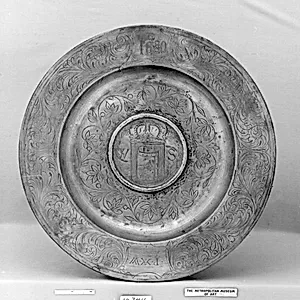
Platter
Unknown Artist
17th century
Medium
Pewter
Dimensions
1 1/2 × 13 1/2 in. (3.8 × 34.3 cm)
Classification
Metalwork-Pewter
Culture
possibly Dutch
Department
European Sculpture and Decorative Arts
Museum
Metropolitan Museum of Art, New York, NY
Credit
Rogers Fund, 1906
Accession Number
06.744
Rights
Public Domain
Tags
Art Historical Context
This elegant 17th-century pewter platter, measuring a slender 1 1/2 × 13 1/2 inches, hails from the European Sculpture and Decor Arts collection at The Metropolitan Museum of Art, through the Rogers Fund in 6. Crafted by an unknown artist, possibly Dutch, it exemplifies the refined metalwork of the period, where pewter—a durable alloy of tin and lead—was prized for its silvery sheen and affordability compared to silver. The platter's defining feature is its engraved coat of arms, a of heraldic design that signified family lineage, status, and prestige among Europe's burgeoning merchant class. In the Dutch Golden Age, such pieces graced affluent households, serving both practical purposes at the table and as displays of social standing. Pewter's malleability allowed skilled artisans to create intricate chasing and engraving techniques, balancing functionality with subtle artistry. Though modest in scale, this platter offers a window into everyday luxury, highlighting how decorative arts bridged utility and symbolism in 17th-century Europe. Visitors can appreciate its patina, a testament to centuries of careful craftsmanship.