
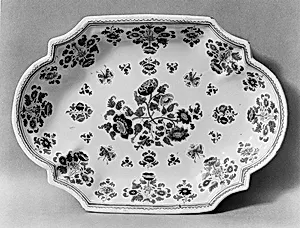
Platter
ca. 1750–70
Medium
Faience (tin-glazed earthenware)
Dimensions
Overall: 14 1/2 × 10 1/4 in. (36.8 × 26 cm)
Classification
Ceramics-Pottery
Culture
French, Moustiers
Department
European Sculpture and Decorative Arts
Museum
Metropolitan Museum of Art, New York, NY
Credit
Gift of R. Thornton Wilson, in memory of Florence Ellsworth Wilson, 1950
Accession Number
50.211.79
Rights
Public Domain
Tags
Art Historical Context
This elegant platter from the Olérys in Moustiers,, dates to around 1750–70 and exemplifies the height of 18th-century faience. Crafted from tin-glazed earthenware a technique that originated in the Islamic world and flourished in Europe, faience allowed for vibrant, durable colors on an otherwise porous clay body. The tin glaze created a, white surface ideal for intricate painted designs, making pieces like this both functional for serving and prized as decorative objects in affluent French households during the Rococo era. Moustiers faience, produced in the Provence region, gained fame for its bold blue palettes and motifs drawn from nature, mythology, and daily life—here highlighted by floral tags suggesting delicate blooms that evoke the opulent gardens of the time. The Olérys workshop, part of a dynasty of master potters, contributed to Moustiers' reputation as a center of ceramic innovation, rivaling porcelain imports from China and Meissen. At 14½ × 10¼ inches, this platter would have graced lavish dinner tables, blending utility with artistry. Today, housed in the Metropolitan Museum of Art's European Sculpture and Decorative Arts Department (gift of R. Thornton Wilson, 1950), it offers a window into France's golden age of ceramics, where everyday ware became high art.