
Platter
Unknown Artist
ca. 1745
Medium
Hard-paste porcelain
Dimensions
Overall: 12 5/8 × 15 3/8 in. (32.1 × 39.1 cm)
Classification
Ceramics-Porcelain-Export
Culture
Chinese, for British market
Department
European Sculpture and Decorative Arts
Museum
Metropolitan Museum of Art, New York, NY
Credit
Helena Woolworth McCann Collection, Gift of Winfield Foundation, 1951
Accession Number
51.86.435
Rights
Public Domain
Tags
Art Historical Context
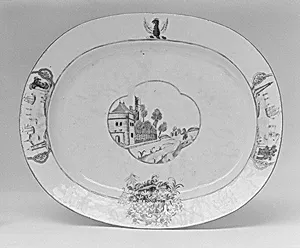
This elegant platter, crafted around 1745, exemplifies the pinnacle of Chinese export porcelain tailored for the British market. an impressive 12⅝ × 15⅜ inches, the hard-paste porcelain piece features intricate decorations of birds, buildings, and a prominent coat of arms—hallmarks of armorial china designed to appeal to European nobility and affluent collectors. Produced in Jingdezhen, China's renowned porcelain capital, such platters were customized with family crests, blending Eastern artistry with Western heraldry. Hard-paste porcelain, fired at extremely high temperatures, yields a durable, translucent body prized for its strength and fine white color—qualities that revolutionized tableware during the 18th century. Chinese potters mastered this technique centuries earlier, fueling a booming trade via the East India Companies. By the 1740s, amid the Qing dynasty's Qianlong era, these export wares flooded British homes, symbolizing wealth and global exchange. Today, housed in the Metropolitan Museum of Art's European Sculpture and Decorative Arts department (gift of the Helena Woolworth McCann Collection, 1951), this platter highlights the cultural fusion of the porcelain route. Imagine it gracing a Georgian dining table, where delicate birds soared amid heraldic pride—a testament to craftsmanship that crossed oceans and empires.