
Platter
Bernard Palissy, last quarter 16th century
About this artwork
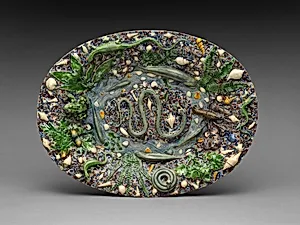
This stunning platter, crafted by the renowned French ceramicist Bernardissy in the last quarter the 16th century exemplifies the Renaissance mastery of lead-glazed earthenware. an impressive 20½ x 15⅝ inches, this Paris-made piece from the Metropolitan Museum of Art's European Sculpture and Decorative collection bursts with naturalistic motifs—fish, frogs, snakes, shells—molded in high relief. Palissy's technique involved pressing real shells and casting lifelike creatures into clay, then glazing with lead for a vibrant, glossy sheen that captured light and texture, mimicking the wonders of nature. Palissy's work, often called "rustic wares," bridged art and science during France's religious wars and cultural flowering. A self-taught Protestant artisan, he drew inspiration from the natural world, embedding Protestant symbolism of resilience amid chaos. His platters were prized by nobility for their trompe l'oeil realism, blending utility with opulence in a era when ceramics rivaled metalwork. Today, this gift to the Met in 1953 invites us to marvel at Palissy's enduring legacy: a celebration of biodiversity in clay, reminding visitors of 16th-century ingenuity and the artistry of observation.