
Platter
Bernard Palissy, second half 19th century
About this artwork
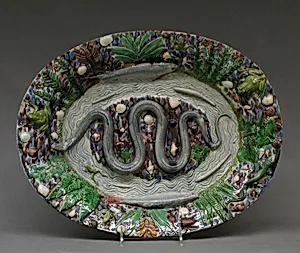
This stunning lead-glazed earthenware platter attributed to Bernard Palissy the second half of the19th century, exemplifies the enduring fascination with the master's naturalistic style. Measuring about 17 by 13 inches, the oval dish bursts with lively motifs of fish and snakes, rendered in high relief to mimic the textures of real creatures. Palissy, originally a 16th-century Huguenot artisan, pioneered "rustic wares" by incorporating actual shells, lizards, and insects into his pottery, creating a sense of teeming natural life. Though this piece dates over 300 years later, it revives his technique during the 19th-century Renaissance revival, blending scientific observation with artistic whimsy. The lead glaze imparts a rich, iridescent sheen that enhances the earthy tones of the earthenware, a medium Palissy perfected for its durability and vivid color potential. Such platters were not just functional serving pieces but conversation starters, symbolizing humanity's harmony—or playful tension—with nature. Displayed in the Metropolitan Museum of Art's European Sculpture and Decorative Arts department, this platter was a generous 1953 gift from Julia A. Berwind, inviting visitors to marvel at how 19th-century makers channeled Palissy's innovative spirit amid growing interest in historicism and the natural world.