
Platter
ca. 1831–ca. 1835
Medium
Earthenware, transfer-printed
Dimensions
12 3/4 x 15 1/2 in. (32.4 x 39.4 cm)
Classification
Platter
Culture
British (American market)
Department
The American Wing
Museum
Metropolitan Museum of Art, New York, NY
Credit
Bequest of Mary Mandeville Johnston, from the collection of Mr. and Mrs. Edward W. S. Johnston, 1914
Accession Number
14.102.258
Rights
Public Domain
Tags
Art Historical Context
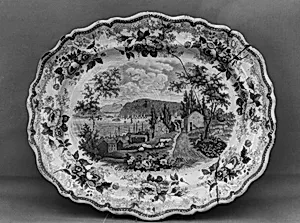
This elegant platter, crafted by the British potters Job and Jackson around 1831–1835, exemplifies the vibrant earthenware tradition aimed at the American market. 12¾ x 15½ inches, it features delicate transfer-printed designs of flowers and landscapes, motifs that brought a touch of pastoral beauty to everyday dining tables. Housed in The Metropolitan Museum of Art's American Wing, it reflects the bequest of Mary Mandeville Johnston from the collection of Mr. and Mrs. Edward. S. Johnston in1914. Transfer-print, the innovative technique used here, involved etching designs onto copper plates, inking them, and transferring the image onto tissue paper before pressing it onto the unfired clay. This method, perfected in Staffordshire, England, during the early 19th century, made intricate decorations affordable and scalable, revolutionizing ceramics production. British firms like the Jacksons exported thousands of such pieces to America, where they graced middle-class homes amid growing transatlantic trade. As a cultural artifact, this platter highlights the Anglo-American exchange of goods during a time of expanding U.S. consumerism. Its floral and scenic patterns evoked idealized nature, offering comfort and refinement in daily life, while underscoring Britain's dominance in the pottery trade before America's own industry fully blossomed. A charming survivor of domestic history!