
Platter
Unknown Artist
1790–1800
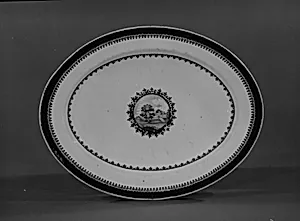
Medium
Porcelain
Dimensions
11 1/2 x 14 13/16 in. (29.2 x 37.6 cm)
Classification
Platter
Culture
Chinese, for American market
Department
The American Wing
Museum
Metropolitan Museum of Art, New York, NY
Credit
Gift of Elizabeth Hazard and Marion H. McVitty, in memory of their mother, Mrs. Lauriston H. Hazard, 1960
Accession Number
60.111.28
Rights
Public Domain
Art Historical Context
This elegant porcelain platter, crafted in China around 1790–1800 specifically for the American market, the height of Sino-American trade in luxury goods during the early republic era. Measuring 11½ x 14⅞ inches (29.2 x 37.6 cm), it was designed as a functional yet opulent serving piece for affluent American households, where Chinese porcelain symbolized refined taste and global connectivity. Produced at imperial kilns or private factories like those in Jingdezhen, such export wares were fired in hard-paste porcelain—a technically advanced medium prized for its durability, translucency, and ability to hold intricate designs under vibrant glazes. In the late 18th century, following the American Revolution, U.S. merchants eagerly imported these platters via ports like Philadelphia and New York, blending Eastern artistry with Western domestic life. Often featuring motifs tailored to foreign tastes—such as florals, landscapes, or armorial crests—they bridged cultures amid booming clipper ship trade. Displayed in The American Wing at The Metropolitan Museum of Art, this generous gift from Elizabeth Hazard and Marion H. McVitty honors family legacy while highlighting porcelain's role in shaping early American material culture. Today, it invites visitors to ponder the invisible networks of commerce that filled Federal-era homes with exotic elegance.