
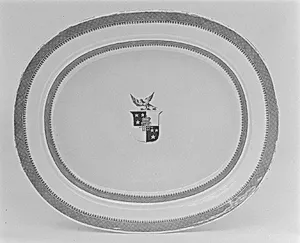
Platter with rack (part of a service)
Unknown Artist
ca. 1790
Medium
Hard-paste porcelain
Dimensions
Overall (platter .257a): 13 3/4 × 17 1/2 in. (34.9 × 44.5 cm); Overall (rack .257b): 11 1/4 × 13 7/8 in. (28.6 × 35.2 cm)
Classification
Ceramics-Porcelain-Export
Culture
Chinese, for British market
Department
European Sculpture and Decorative Arts
Museum
Metropolitan Museum of Art, New York, NY
Credit
Helena Woolworth McCann Collection, Gift of Winfield Foundation, 1951
Accession Number
51.86.257a, b
Rights
Public Domain
Tags
Art Historical Context
This elegant platter with rack, crafted around 1790, exemplifies Chinese export porcelain tailored for the British market. from durable hard-paste porcelain—a true porcelain formula perfected in China centuries earlier, prized for its translucency strength, and fine white body—this piece was part of a larger dinner service. The platter measures 13¾ × 17½ inches, while the accompanying rack is 11¼ × 13⅞ inches, ideal for displaying roasts or pastries in grand British dining rooms. Produced during the late 18th-century peak of Sino-European trade, these wares were customized to Western tastes. Chinese artisans meticulously copied European designs, often coats of arms and motifs like birds, sent via merchant orders. This personalization made armorial porcelain a status symbol for affluent British families, blending Eastern technical mastery with Western heraldry. Today, housed in the Metropolitan Museum of Art's European Sculpture and Decorative Arts department (Helena Woolworth McCann Collection, 1951), it highlights the global exchange of luxury goods, where Chinese export ceramics rivaled silver in sophistication and adorned tables across the British Empire.