
Plum Blossom
1815
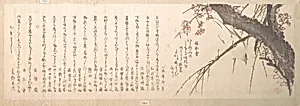
Medium
Woodblock print (surimono); ink and color on paper
Dimensions
5 1/2 x 6 5/8 in. (14 x 16.8 cm)
Classification
Prints
Culture & Period
Japan · Edo period (1615–1868)
Department
Asian Art
Museum
Metropolitan Museum of Art, New York, NY
Credit
H. O. Havemeyer Collection, Bequest of Mrs. H. O. Havemeyer, 1929
Accession Number
JP1932
Rights
Public Domain
Tags
Art Historical Context
Nestled in the Metropolitan Museum of Art's Asian Art collection, *Plum Blossom* (1815) by Kubo Shunman is exquisite woodblock print, or *surimono*, crafted in ink and color on paper. Measuring just 5½ x 6⅝ inches, this intimate format was designed for private enjoyment, often commissioned for New Year's celebrations or poetry gatherings during Japan's Edo period (16151868). Shunman, a versatile ukiyo artist known for his poetic depictions of nature, captures the delicate branches and blooming plums with elegant simplicity, evoking the season's fragile beauty. Surimono like this one stand out for their luxury: printed with high-quality pigments, subtle embossing, and sometimes metallic accents (though not specified here), they were far more refined than mass-produced ukiyo-e. Plum blossoms held deep cultural resonance in Japan, symbolizing perseverance and renewal as the first flowers to brave winter's chill—a motif beloved in poetry and painting. This print, part of the H. O. Havemeyer Collection bequeathed in 1929, exemplifies Edo-era artistry's fusion of technical precision and seasonal poetry. Shunman's masterful composition invites viewers to appreciate the interplay of negative space and vibrant color, a hallmark of Japanese printmaking that influenced global art. Pause before it to feel the quiet strength of these enduring blooms.
About the Artist
Kubo Shunman · 1757–1820
Japanese, 1757–1820