
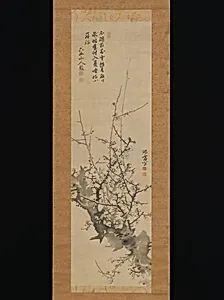
Plum Blossoms
18th–19th century
Medium
Hanging scroll; ink on paper
Dimensions
Image: 41 1/4 × 12 1/2 in. (104.7 × 31.7 cm) Overall with mounting: 68 7/16 × 18 1/4 in. (173.8 × 46.4 cm) Overall with knobs: 68 7/16 × 20 3/8 in. (173.8 × 51.8 cm)
Classification
Paintings
Culture & Period
Japan · Edo period (1615–1868)
Department
Asian Art
Museum
Metropolitan Museum of Art, New York, NY
Credit
Mary Griggs Burke Collection, Gift of the Mary and Jackson Burke Foundation, 2015
Accession Number
2015.300.171
Rights
Public Domain
Tags
Art Historical Context
Minagawa Kien’s *um Blossoms*, a hanging scroll created during Japan’s Edo period (1615–1868), captures the quiet elegance of nature through the medium of ink on paper. This format was especially valued in East Asian traditions for its portability and intimate viewing experience, allowing the painting to be displayed seasonally in a tokonoma alcove. The restrained palette of black ink highlights the artist’s skillful brushwork, where delicate lines and subtle washes evoke the fragile petals and sturdy branches of plum trees. Plum blossoms held deep cultural resonance in Edo-period Japan, symbolizing resilience and renewal as they bloom amid winter’s chill. Kien’s composition reflects the literati ideals popular at the time, blending Chinese scholarly influences with Japanese sensibilities to create a work that feels both contemplative and refined. Visitors often find these scrolls invite slow looking, revealing the artist’s sensitivity to seasonal change and the beauty of simplicity. Housed in the Metropolitan Museum of Art’s Asian Art collection as part of the Mary Griggs Burke gift, this piece offers a window into the refined tastes of Edo society, where painting served as both personal meditation and a celebration of nature’s enduring cycles.