
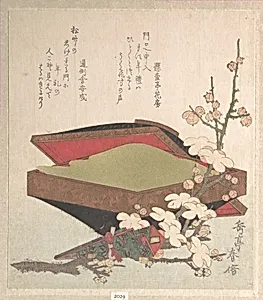
Plum Blossoms and Cake-Box
1819
Medium
Woodblock print (surimono); ink and color on paper
Dimensions
8 1/16 x 7 1/8 in. (20.5 x 18.1 cm)
Classification
Prints
Culture & Period
Japan · Edo period (1615–1868)
Department
Asian Art
Museum
Metropolitan Museum of Art, New York, NY
Credit
H. O. Havemeyer Collection, Bequest of Mrs. H. O. Havemeyer, 1929
Accession Number
JP2029
Rights
Public Domain
Tags
Art Historical Context
In the refined world of Edo-period Japan (1615–1868), Yashima Gakute *Plum Blossoms and Cake-Box* (1819) captures a moment of poetic elegance through the intimate medium of surim—a luxury woodblock print for private occasions like New Year's celebrations. This small gem, measuring just 8 1/16 x 7 1/8 inches, showcases Gakutei's mastery as a ukiyo-e artist and kyōka poet, blending delicate ink and vibrant colors on paper to evoke seasonal beauty. Surimono prints like this one were artisanal treasures, often featuring embossing (karazuri), mica dusting, or metallic pigments for a tactile, shimmering effect far surpassing standard ukiyo-e. Here, plum blossoms—symbols of winter's endurance and early spring renewal—grace the composition alongside a cake-box, hinting at wagashi sweets shared during festive gatherings. Gakutei's precise lines and subtle shading highlight his Kyoto school influences, prioritizing harmony over the bustling scenes of Tokyo counterparts. Part of the esteemed H. O. Havemeyer Collection at the Metropolitan Museum of Art, this print reflects Japan's cultural reverence for nature's cycles and ephemeral joys, inviting viewers to savor the quiet artistry of everyday poetry in bloom.
About the Artist
Yashima Gakutei · 1786–1868
Yashima Gakutei (c. 1786–1868), born in Osaka as the illegitimate son of a Tokugawa shogunate samurai named Hirata, adopted the name from his mother's subsequent marriage into the Yashima clan. Little is documented about his early years beyond these familial ties, but he pursued artistic training under the esteemed ukiyo-e masters Totoya Hokkei and Katsushika Hokusai, absorbing their precision in ...