
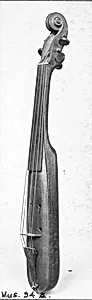
Pochette
Unknown Artist
ca. 1700
Medium
wood
Dimensions
L. 1 ft. 8-1/2 in., W. 2-1/2 in.
Classification
Chordophone-Lute-bowed-unfretted
Culture
French
Department
Musical Instruments
Museum
Metropolitan Museum of Art, New York, NY
Credit
The Crosby Brown Collection of Musical Instruments, 1889
Accession Number
89.4.973
Rights
Public Domain
Art Historical Context
This elegant pochette, crafted around 1700 in France, represents a charming example of Baroque-era musical ingenuity. Measuring just over twenty inches in length, this compact wooden instrument belongs to the chordophone family of bowed lutes without frets. Its slender profile allowed dancing masters to slip it into a coat pocket while teaching aristocratic pupils the refined steps of the period. Made primarily of wood, the pochette relies on the material’s natural resonance to produce a surprisingly clear tone despite its diminutive size. Historically, pochettes served both practical and social functions in 17th- and 18th-century Europe. French makers refined the design to balance portability with musical capability, often adorning the body with subtle carving or inlay that reflected the era’s taste for ornament. As part of the Metropolitan Museum’s Crosby Brown Collection, this example preserves the intimate connection between music, dance, and courtly culture at the dawn of the 18th century. Visitors can imagine the soft strains of a minuet filling a candlelit salon as the teacher guided students through graceful movements.