
Pod Lid
Unknown Artist
9th–10th century
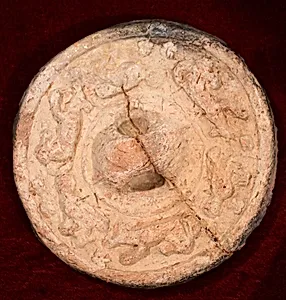
Medium
Earthenware
Classification
Ceramics
Department
Islamic Art
Museum
Metropolitan Museum of Art, New York, NY
Credit
Rogers Fund, 1948
Accession Number
48.101.23
Rights
Public Domain
Tags
Art Historical Context
Welcome to the Islamic Art galleries at the Metropolitan Museum of Art where we encounter the exquisite "Pod Lid," crafted by an unknown artist in the 9th–10th century. This earthen ceramic piece, acquired through the Rogers Fund in 1948, hails from the Abbasid era—a golden age of Islamic culture centered in Baghdad and spanning the vast caliphate. Earthenware, made from-fired clay, was a staple medium for everyday and decorative objects, allowing artisans to experiment with molded forms and affordable production techniques that reached households across the Islamic world. The lid's ingenious pod-like shape showcases the creativity of Islamic potters, who often drew inspiration from nature for vessel designs. Its animal motifs, hinted at in the object's tags, reflect a vibrant tradition in secular ceramics where lively creatures—such as birds, beasts, or fantastical hybrids—adorned surfaces through incising, molding, or slip decoration. Unlike religious art's aversion to figuration, these playful designs celebrated the natural world, possibly symbolizing abundance or storytelling from Persian and Central Asian influences. This modest yet masterful lid offers a window into daily life and artistic ingenuity during a time of cultural flourishing, reminding us how ceramics bridged utility and beauty in medieval Islamic society. Pause here and imagine it crowning a spice jar in a bustling 10th-century market!