
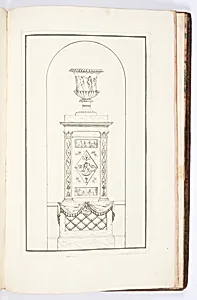
POELE Russe avec pilastres d’ordre composé, orné de camés et draperies
Medium
Classification
Department
Smithsonian Collection
Museum
Smithsonian American Art Museum
Credit
Purchased for the Museum by the Advisory Council
Accession Number
1921-6-407-33
Rights
Public Domain
About this artwork
Research in Progress
Art Historical Context
Visitors to the Smithsonian American Art Museum can admire *POELE Russe avec pilastres d’ordre composé, orné de camés et draperies* (ca. 1791), a delicate print by French artist Louis-Gustave Taraval (1738–1794). This work depicts an ornate Russian-style stove, or *poêle*, embellished with pilasters in the composite architectural order—a lavish fusion of Ionic and Corinthian elements—along with cameos and flowing draperies. As a print, it captures the intricate details of decorative design with precision, showcasing Taraval's skill in engraving during the late Enlightenment era. Created around the eve of the French Revolution, the artwork reflects the era's fascination with grand interiors and exotic influences, blending classical architecture with Russo-European opulence. Taraval, a prominent French engraver, specialized in such ornamental prints that served as blueprints for luxury furnishings and fireplaces, disseminating sophisticated tastes across Europe. The "Russian" stove motif highlights cultural exchanges, as tiled heating stoves from Russia gained popularity in Western Europe for their efficiency and aesthetic appeal. Purchased for the museum by the Advisory Council, this piece from the Smithsonian Collection invites us to ponder the artistry behind everyday luxury. Though research continues, it stands as a testament to 18th-century design innovation, bridging fine art and functional elegance.