
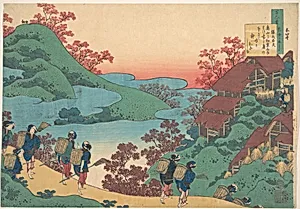
百人一首 乳母かゑとき 猿丸太夫|Poem by Sarumaru Dayū, from the series One Hundred Poems Explained by the Nurse (Hyakunin isshu uba ga etoki)
Medium
Woodblock print; ink and color on paper
Dimensions
10 x 14 3/8 in. (25.4 x 36.5 cm)
Classification
Prints
Culture & Period
Japan · Edo period (1615–1868)
Department
Asian Art
Museum
Metropolitan Museum of Art, New York, NY
Credit
Gift of Louis V. Ledoux, 1931
Accession Number
JP2403
Rights
Public Domain
Tags
Art Historical Context
Katsushika Hokusai's *Poem by Sarumaru Dayū, from the series One Hundred Poems Explained by the Nurse (Hyakunin isshu uba ga etoki)* (1839) is a vibrant woodblock print that brings to life one of the waka poems in Japan's beloved *Hyakunin Isshu* anthology. Compiled in the 13th century by Fujiwara no Teika, this collection of classical poetry by emperors, nobles, and monks like Sarumaru Dayū captivated Edo-period audiences. Hokusai depicts the poem's evocative imagery—featuring women, houses nestled among hills and trees—through the narrative lens of a "nurse" storyteller, a popular format that made ancient verse relatable and visual. As a master of ukiyo-e ("pictures of the floating world"), Hokusai employed intricate woodblock carving and layered ink-and-color printing on paper to achieve luminous skies, textured foliage, and dynamic compositions. Measuring just 10 x 14⅜ inches, this intimate print exemplifies his late-career versatility, blending landscape beauty with literary tradition during Japan's Edo period (1615–1868), when such affordable art democratized high culture for urban dwellers. Housed in the Metropolitan Museum of Art's Asian Art department since a 1931 gift from Louis V. Ledoux, it highlights poetry's enduring role in Japanese visual arts, inviting viewers to ponder Sarumaru Dayū's words amid nature's quiet drama.
About the Artist
Katsushika Hokusai · 1760–1849
Katsushika Hokusai (1760-1849) stands as one of history's most influential artists, a Japanese master who revolutionized the ukiyo-e woodblock print tradition and profoundly shaped Western art. Born in the Katsushika district of Edo (modern-day Tokyo) to an artisan family, Hokusai lived through nearly nine decades of extraordinary creative evolution, adopting over thirty different artistic names t...