
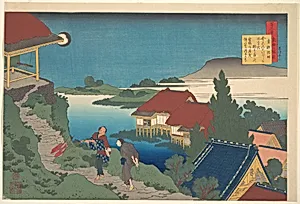
百人一首 乳母か縁説 素胜法師|Poem by Sōsei Hōshi, from the series One Hundred Poems Explained by the Nurse (Hyakunin isshu uba ga etoki)
Medium
Woodblock print; ink and color on paper
Dimensions
9 3/4 x 14 3/4 in. (24.8 x 37.5 cm)
Classification
Prints
Culture & Period
Japan · Taishō period (1912–26)
Department
Asian Art
Museum
Metropolitan Museum of Art, New York, NY
Credit
Gift of Mrs. Carll Tucker, 1962
Accession Number
JP3418
Rights
Public Domain
Tags
Art Historical Context
This vibrant woodblock print by Katsushika Hokus, created in 1921 during Japan's Taishō period (2–1926), to the series *One Poems Explained by the NurseHyakunin isshu uba ga etoki)*. It illustrates a poem by the9th-century poet Sō Hōshi from the renowned *Hyakunin Isshu* anthology, a classic collection of 100 waka poems compiled in the 13th century. this "etoki" tradition—meaning "picture explanation"—a nurse narrates the poems' stories through evocative imagery, blending literature and visual art for popular edification. Hokusai, the ukiyo-e master famed for dynamic landscapes like *The Great Wave*, here captures a scene blending men, architectural buildings, and sweeping landscapes, likely evoking the poem's emotional or narrative essence. The Taishō era saw a revival of traditional woodblock printing amid modernization, making this work a bridge between Edo-period aesthetics and 20th-century tastes. Printed with ink and color on paper (9 3/4 x 14 3/4 in.), it showcases Hokusai's precise carving techniques, vibrant gradients, and compositional harmony that draw viewers into Japan's poetic heritage. Now in the Metropolitan Museum of Art's Asian Art Department (gift of Mrs. Carll Tucker, 1962), this print highlights woodblock's cultural role in democratizing poetry, inviting us to ponder timeless themes of love and longing amid everyday scenes.
About the Artist
Katsushika Hokusai · 1760–1849
Katsushika Hokusai (1760-1849) stands as one of history's most influential artists, a Japanese master who revolutionized the ukiyo-e woodblock print tradition and profoundly shaped Western art. Born in the Katsushika district of Edo (modern-day Tokyo) to an artisan family, Hokusai lived through nearly nine decades of extraordinary creative evolution, adopting over thirty different artistic names t...