
Poke bonnet
Unknown Artist
ca. 1865
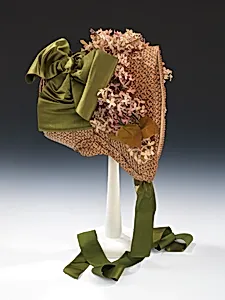
Medium
straw, silk, cotton
Classification
Poke bonnet
Culture
American
Department
Costume Institute
Museum
Metropolitan Museum of Art, New York, NY
Credit
Brooklyn Museum Costume Collection at The Metropolitan Museum of Art, Gift of the Brooklyn Museum, 2009; Gift of Sarah F. Milligan and Kate Milligan Brill, 1940
Accession Number
2009.300.1427
Rights
Public Domain
Art Historical Context
Step into the elegant world of mid-19th-century American fashion this charming poke bonnet, crafted around 1865 from delicate straw, silk, and. Poke bonnets, named for their distinctive projecting front brim that "p" forward like a beak, were a staple of women's headwear from the 1830s the 1860s. This example, from the Costume Institute at The Metropolitan Museum of Art, the era's blend of practicality and femininity, with its lightweight straw base offering sun protection and ventilation—essential during the Civil War years and Reconstruction. The bonnet's construction highlights artisanal techniques of the time: straw was meticulously woven or plaited into a structured frame, then adorned with luxurious silk ribbons and cotton trims for a touch of refinement. In American culture, such accessories signified social status and modesty, framing the face to accentuate delicate features while shielding wearers from the elements. Worn by women across classes, poke bonnets bridged everyday utility and high fashion, evolving from wide-brimmed Regency styles to more compact Victorian forms. Preserved through the Brooklyn Museum Costume Collection (gifted in 1940 and transferred to the Met in 2009), this anonymous masterpiece offers a tangible glimpse into 1860s life, reminding us how clothing wove personal identity into the fabric of history.