
Pole End
Unknown Artist
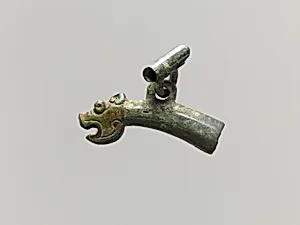
Medium
Bronze
Dimensions
L. 1 15/16 in. (4.9 cm); W. 1 3/8 in. (3.5 cm); Diam. 15/32 in. (4.9 cm)
Classification
Metalwork
Culture & Period
China · Han dynasty (206 B.C.–A.D. 220)
Department
Asian Art
Museum
Metropolitan Museum of Art, New York, NY
Credit
Gift of Mrs. George Nichols, 1961
Accession Number
61.229.2
Rights
Public Domain
Art Historical Context
Nestled in the Metropolitan Museum of Art's Asian Art collection, *Pole End* is a delicate bronze artifact from China's Han dynasty (206 B.C.–A.D. 220). Measuring just under 2 inches long, this small metalwork piece—likely a finial or decorative cap for the end of a pole, staff, or banner—exemplifies the era's masterful bronze craftsmanship. Donated in 1961 by Mrs. George Nichols, it invites us to glimpse the refined artistry of ancient China. The Han dynasty marked a golden age of innovation, stability, and cultural flourishing after centuries of warfare. Bronze, a hallmark material, was cast using sophisticated lost-wax or piece-mold techniques, allowing for intricate details on objects both utilitarian and ceremonial. Such pole ends often adorned military standards, ritual implements, or horse fittings in tombs, symbolizing status and imperial power. Their modest size belies their cultural weight: these fittings connected the everyday with the divine, reflecting Confucian ideals of harmony and hierarchy. Though the artist remains unknown, *Pole End* embodies Han metalwork's elegance—smooth surfaces, precise proportions, and enduring patina. It reminds visitors of a dynasty that advanced metallurgy, paving the way for later Chinese art, and offers a tangible link to lives lived over 2,000 years ago.