
Pont Aberglaslyn
1812
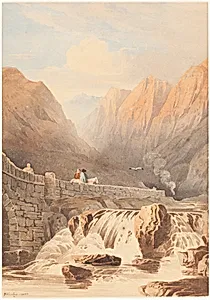
Medium
watercolor over graphite on wove paper
Dimensions
overall: 33.4 x 23.3 cm (13 1/8 x 9 3/16 in.)
Classification
Drawing
Department
CG-E
Museum
National Gallery of Art, Washington, D.C.
Credit
Ailsa Mellon Bruce Fund
Accession Number
1987.59.1
Rights
Public Domain
Art Historical Context
**Pont Aberglaslyn, Varley, 1812** Nestled in the dramatic landscapes of North Wales, John Varley's *Pont Aberglaslyn* captures the awe-inspiring Pont Aberglaslyn bridge spanning a turbulent gorge. Created in 1812, this watercolor over graphite on wove paper33.4 x 23.3 cm) exemplifies the era's fascination with nature's sublime power. Varley, a leading British watercolorist and influential teacher to artists like J.M.W. Turner and Richard Parkes Bonington, was renowned for his luminous depictions of Welsh scenery, drawn from direct observation during sketching tours. The artwork's technique highlights Varley's mastery: faint graphite underdrawings provide precise structure, overlaid with translucent watercolor washes that evoke misty atmospheres and sparkling water. Wove paper, smooth and absorbent, allowed for delicate layering without the texture of laid paper, enhancing the medium's fluidity—central to England's vibrant watercolor tradition in the early 19th century. This intimate drawing, now in the National Gallery of Art (Ailsa Mellon Bruce Fund), reflects the period's shift toward plein air studies, celebrating Britain's wild terrains amid industrial change. Varley's work not only advanced watercolor as a serious art form but also invited viewers to ponder nature's grandeur, making *Pont Aberglaslyn* a timeless portal to Regency-era wanderlust.