
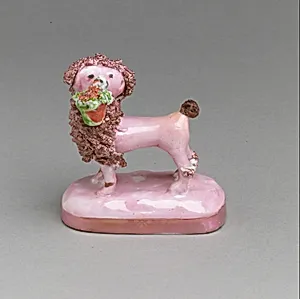
Poodle
19th century
Medium
Lustreware
Dimensions
Height: 3 in. (7.6 cm)
Classification
Ceramics-Pottery
Culture
British
Department
European Sculpture and Decorative Arts
Museum
Metropolitan Museum of Art, New York, NY
Credit
Gift of Sidney H. and Helen M. Witty, 1964
Accession Number
64.173.97
Rights
Public Domain
Tags
Art Historical Context
Nestled in the Metropolitan Museum of Art's European Sculpture and Decorative collection, *Poodle* by British ceramicist Mary Atwood captures the charm of 19th-century whimsy in a petite lustreware figure standing just 3 inches tall This delightful dog sculpture, gifted by Sidney H. and Helen M. Witty in 1964, exemplifies the era's fascination with animal motifs, particularly beloved pets like poodles, which symbolized elegance and companionship in Victorian and Edwardian households. Crafted in lustreware technique involving metallic oxides fired onto glazed pottery to create a shimmering, iridescent sheen—Atwood's work highlights innovative British ceramics. Popularized in the late 19th century by studios like Wedgwood and Pilkington's, lustreware brought affordable luxury to middle-class homes, transforming everyday objects into jewel-like treasures. The poodle's glossy, rainbow-hued surface would have sparkled under gaslight, making it a perfect mantelpiece or desk ornament. Beyond its technical artistry, *Poodle* reflects Britain's cultural devotion to dogs as faithful friends and status symbols. Atwood's skillful modeling imbues the figure with lifelike personality, inviting visitors to appreciate how decorative arts bridged fine art and domestic life in the 19th century. A small gem, it reminds us of pottery's power to delight and endure.