
Porringer
ca. 1720
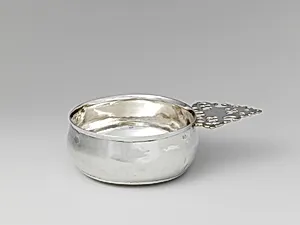
Medium
Silver
Dimensions
Overall: 2 1/4 x 8 1/16 in. (5.7 x 20.5 cm); 8 oz. 16 dwt. (274.3 g) Body: Diam. 5 3/8 in. (13.7 cm) Lip: Diam. 5 3/16 in. (13.2 cm)
Classification
Porringer
Culture
American
Department
The American Wing
Museum
Metropolitan Museum of Art, New York, NY
Credit
Bequest of Alphonso T. Clearwater, 1933
Accession Number
33.120.338
Rights
Public Domain
Art Historical Context
Step into the refined world of colonial American craftsmanship with this exquisite porringer, crafted by silversmith John Codd around 1720. A porringer was a versatile shallow bowl, often used for serving porridge, soups, or even as a child's dish, prized in households for both practicality and display. Measuring just 2¼ inches high with a 5⅜-inch body diameter, this silver piece weighs a substantial 8 ounces 16weight, reflecting the high quality of its hand-wrought construction. In early 18th-century America, silver objects like this were symbols of wealth and status, commissioned by prosperous families in bustling ports like New York, where Coddington worked. His work exemplifies the colonial silversmith's skill in shaping, chasing, and polishing silver into functional yet elegant forms, blending British influences with emerging American aesthetics. The flared lip and sturdy proportions highlight techniques passed down from European traditions, adapted to local tastes. Now housed in The Metropolitan Museum of Art's American Wing, this porringer was generously bequeathed by Alphonso T. Clearwater in 1933. It offers a tangible glimpse into everyday luxury during America's formative years, reminding us how even humble tableware embodied artistry and aspiration.