
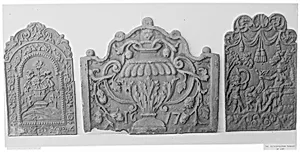
Portion of fireback
Unknown Artist
1677
Medium
Iron
Dimensions
Overall: 23 1/2 × 27 1/4 in. (59.7 × 69.2 cm)
Classification
Metalwork-Iron
Culture
British or Dutch
Department
European Sculpture and Decorative Arts
Museum
Metropolitan Museum of Art, New York, NY
Credit
Rogers Fund, 1908
Accession Number
08.81.1
Rights
Public Domain
Art Historical Context
This intriguing *Portion of fireback* from 1677 offers a glimpse into the everyday luxury of 17th-century homes. Crafted in iron, firebacks like this were cast panels placed at the back of open hearths to radiate heat more effectively while serving as decorative focal points. Sized at 23½ × 27¼ inches, this substantial fragment—likely from a larger piece—exemplifies the blend of utility and artistry in household metalwork, radiating warmth both literally and aesthetically. Dating to the late Baroque era, the piece reflects British or Dutch craftsmanship, regions renowned for their advanced iron foundries. During this period, firebacks often featured intricate relief designs inspired by heraldry, mythology, or biblical scenes, symbolizing the owner's status and piety amid the prosperity of the Dutch Golden Age or Restoration England. The casting technique itself was a marvel, involving detailed sand molds that captured fine details before pouring molten iron, a labor-intensive process highlighting skilled metallurgy. Acquired through the Rogers Fund in 1908 and housed in the Metropolitan Museum of Art's European Sculpture and Decorative Arts department, this survivor speaks to the durability of iron and the cultural value placed on functional art. Though incomplete, it invites us to imagine the flickering glow of a long-ago fireside, connecting visitors to the intimate rhythms of historical domestic life.