
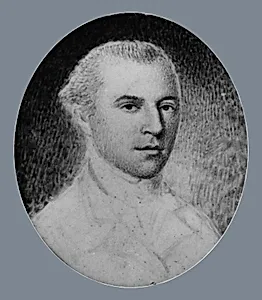
Portrait of a Gentleman
ca. 1777
Medium
Watercolor on ivory
Dimensions
Sight: 1 1/2 x 1 1/4 in. (3.8 x 3.2 cm)
Classification
Painting, miniature
Culture
American
Department
The American Wing
Museum
Metropolitan Museum of Art, New York, NY
Credit
Fletcher Fund, 1938
Accession Number
38.146.11
Rights
Public Domain
Tags
Art Historical Context
**Portrait of a Gentleman** Charles Willson Peale created around 1777, is a delicate watercolor on ivory miniature, measuring just 1 1/2 x 1 1/4 inches. Housed in The Metropolitan Museum of Art's American Wing, this tiny gem exemplifies the intimate portraiture popular in colonial America. Peale, a leading figure in early American art, captured his subject's likeness with remarkable precision, making it ideal for wearing as a brooch or locket—a cherished personal keepsake during an era of uncertainty. Painted amid the American Revolutionary War, the work reflects Peale's own patriotic fervor; he served as a soldier and painted portraits of Founding Fathers like George Washington. Watercolor on ivory allowed for luminous, translucent effects, showcasing Peale's mastery of fine brushwork and subtle shading on the challenging, non-absorbent surface. These miniatures were technical marvels, demanding patience and skill to achieve lifelike detail in such a small scale. This portrait highlights the cultural role of portraiture in 18th-century America, preserving identity and status for gentlemen of the time. Peale's Enlightenment ideals—blending art, science, and civic virtue—shine through, offering visitors a window into Revolutionary-era life and the birth of a national artistic tradition.
About the Artist
Charles Willson Peale · 1741–1827
Charles Willson Peale (1741–1827) was an American painter, museum founder, naturalist, and inventor who became the most important American portraitist of the Revolutionary era and a central figure in the cultural life of the young republic. Born in Queen Anne's County, Maryland, he initially trained as a saddler before turning to painting, studying briefly with John Singleton Copley in Boston and ...