
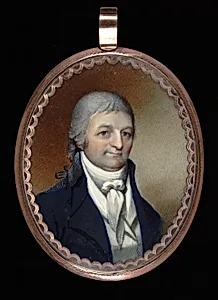
Portrait of a Gentleman
ca. 1790
Medium
Painting-Miniature
Classification
Painting-Miniature
Department
Smithsonian Collection
Museum
Smithsonian American Art Museum
Credit
Smithsonian American Art Museum, Museum purchase
Accession Number
1975.5
Rights
Public Domain
Tags
About this artwork
In this miniature the unknown artist concentrated on this sitter’s facial features, whereas the coat and cravat appear with less detail. During the reign of George III in England, powdered wigs and natural hair were worn in “pigtail queues” and men’s coats had a shawl-like cut at the collar. In the sitter’s portrait, remnants of hair powder appear on his collar and the bow in his hair, indicating that he followed the English fashion.
Art Historical Context
Step into the refined world of late 18th-century portrait with *Portrait of a Gentleman*, delicate miniature painting created around 1790 by an artist. Housed in the Smithsonian American Art Museum, this-length work captures an anonymous sitter's poised visage, showcasing the intimate scale typical of miniatures—small jewels of art often worn as lockets or brooches, treasured as personal mementos by the elite. The unknown painter masterfully prioritized the gentleman's facial features, rendering them with sharp clarity while softening details in his coat and cravat. Fashion cues reveal strong English influences from the reign of George III (1760–1820): powdered hair tied in a "pigtail queue" with a bow, and remnants of powder dusting the shawl-like collar of his coat. These elements highlight transatlantic style trends, blending formality with emerging naturalism in an era when such portraits affirmed social status. Miniatures like this exemplify technical virtuosity in watercolor or gouache on ivory (common for the medium), demanding precision in tiny formats. As a museum purchase in the Smithsonian Collection, it offers a window into everyday elegance of the time, inviting us to ponder the sitters identity and the lives behind these powdered locks.
About the Artist
Unidentified ( ) · –