
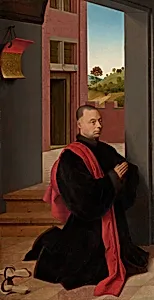
Portrait of a Male Donor
c. 1455
Medium
oil on panel
Dimensions
overall: 42 x 21.2 cm (16 9/16 x 8 3/8 in.) framed: 54.3 x 35.5 x 9.2 cm (21 3/8 x 14 x 3 5/8 in.)
Classification
Painting
Department
CNE-R
Museum
National Gallery of Art, Washington, D.C.
Credit
Samuel H. Kress Collection
Accession Number
1961.9.10
Rights
Public Domain
Art Historical Context
Petrus Christus, a leading figure in the Early Netherlandish tradition and a follower of Jan van Eyck, created this intimate portrait around 1455. Likely the left wing of a devotional diptych or altarpiece, the panel depicts a male donor in prayer, a common format that allowed wealthy patrons to be shown in perpetual devotion alongside sacred figures. The modest size—just over sixteen inches tall—suggests it was designed for private contemplation rather than public display. Christus worked in Bruges during a period when oil painting techniques reached new levels of refinement. By layering translucent glazes over a detailed underdrawing, he achieved the luminous skin tones, rich fabrics, and precise architectural details that characterize his style. The oil medium on oak panel enabled the subtle play of light and texture that made Northern Renaissance portraits feel remarkably lifelike. Today in the National Gallery of Art’s collection, the painting offers visitors a window into fifteenth-century piety and patronage. Its careful realism and quiet dignity reflect both the donor’s desire for spiritual presence and Christus’s mastery of observation, qualities that continue to draw viewers centuries later.