
Portrait of a Man
probably ca. 1862
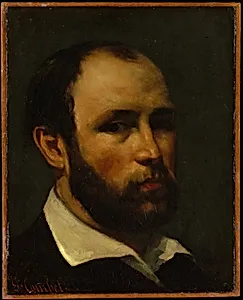
Medium
Oil on canvas
Dimensions
16 1/4 x 13 1/8 in. (41.3 x 33.3 cm)
Classification
Paintings
Department
European Paintings
Museum
Metropolitan Museum of Art, New York, NY
Credit
H. O. Havemeyer Collection, Bequest of Mrs. H. O. Havemeyer, 1929
Accession Number
29.100.201
Rights
Public Domain
Tags
Art Historical Context
**Portrait of a Man** by Gustave Courbet, created around 1862, exemplifies French master's commitment to Realism. This modest oil on canvas (16¼ × 13⅛ in.) presents a direct, unflinching portrayal of its male subject, rendered with Courbet's signature thick impasto technique that emphasizes texture and immediacy. As a leader of the Realist movement in mid-19th-century France, Courbet rejected Romantic idealism and academic polish, instead celebrating ordinary people and everyday truths with bold, earthy vigor. The painting's intimate scale suggests a personal commission or study, inviting viewers into a psychological encounter through the man's steady gaze. Courbet's portraits often humanized their subjects, challenging the era's hierarchical art conventions by elevating the commonplace to high art. Housed in the Metropolitan Museum of Art's European Paintings department as part of the prestigious H. O. Havemeyer Collection (bequeathed in 1929), it reflects the collector's passion for forward-thinking 19th-century works. This piece underscores Realism's cultural shift toward authenticity amid France's social upheavals, offering museum visitors a window into Courbet's revolutionary gaze on humanity.
About the Artist
Gustave Courbet · 1819–1877
Jean Désiré Gustave Courbet (1819-1877) was a French painter who revolutionized 19th-century art as the founding figure of the Realism movement. Born in Ornans, a small town in the Doubs region of France, Courbet came from a prosperous farming family with anti-monarchical roots—his maternal grandfather had participated in the French Revolution. This background shaped his lifelong commitment to dep...