
Portrait of a Man
1664
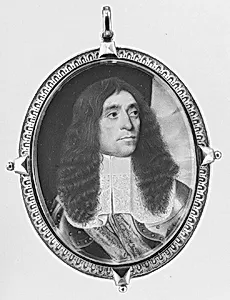
Medium
Vellum laid on prepared gessoed card
Dimensions
Oval, 2 1/2 x 2 in. (62 x 51 mm)
Classification
Miniatures
Department
European Paintings
Museum
Metropolitan Museum of Art, New York, NY
Credit
Bequest of Mary Clark Thompson, 1923
Accession Number
24.80.510
Rights
Public Domain
Tags
Art Historical Context
In the intimate world of 17th-century portrait miniatures, David Myers' *Portrait of a Man*1664) captures the essence of personal commemoration in a remarkably small oval frame, measuring just 2½ x 2 inches (62 x 51 mm). Crafted in the European tradition, this delicate work from the Metropolitan Museum of Art Department of European Paintings exemplifies the miniature genre—highly prized, pocket-sized likenesses often worn as jewelry or treasured in private collections. Myers employed vellum, a fine parchment made from animal skin, laid on a prepared gessoed card for a smooth, luminous surface ideal for intricate detail. This technique, common among miniaturists of the Baroque era, allowed for vivid colors and lifelike features despite the tiny scale, reflecting the era's fascination with realism and status symbolism. Such portraits served as tokens of affection, memory, or alliance, bridging the gap between painting and personal adornment. Bequeathed to the Met in 1923 by Mary Clark Thompson, this piece highlights the enduring appeal of miniatures as accessible art forms. Though the sitter remains unidentified, it invites visitors to ponder the stories behind this enigmatic gentleman's gaze, a window into 17th-century European life.