
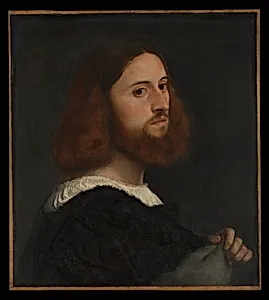
Portrait of a Man
ca. 1515
Medium
Oil on canvas
Dimensions
19 3/4 x 17 3/4 in. (50.2 x 45.1 cm)
Classification
Paintings
Department
European Paintings
Museum
Metropolitan Museum of Art, New York, NY
Credit
Bequest of Benjamin Altman, 1913
Accession Number
14.40.640
Rights
Public Domain
Tags
About this artwork
Portrait of a Man is a paintings by Italian artist Titian (Tiziano Vecellio), created in ca. 1515. The work was created using oil on canvas. It measures 19 3/4 x 17 3/4 in. (50.2 x 45.1 cm). The painting showcases the artistic techniques and aesthetic sensibilities of its era, reflecting both technical skill and cultural context. Artists of this period developed sophisticated approaches to composition, color, and subject matter that defined their artistic milieu. The work demonstrates mastery of...
Art Historical Context
Titian's *Portrait of a Man*, around 1515, captures the essence of early Venetian Renaissance portraiture. At just 19¾ x 17¾ inches, this intimate oil-on-canvas work showcases the young artist's emerging genius. Titian, born Tiziano Vecellioc. 1488–1576), was revolutionizing painting in Venice through his bold use of color and light, influenced by his mentor Giorgione. This period marked Venice's shift from the structured Florentine Renaissance toward a more sensual, atmospheric style, where portraits like this emphasized individuality and psychological depth over stiff formality. The painting exemplifies Titian's mastery of oil techniques, including glazing for luminous skin tones and subtle modeling that brings the subject's gaze to life. Such small-scale bust-length portraits were often commissions for private patrons, reflecting the era's growing interest in personal legacy amid Italy's prosperous merchant class. Though the sitter remains unidentified, the work highlights Titian's innovative approach to realism, blending observation with idealization. Acquired through the 1913 bequest of collector Benjamin Altman, it graces the Metropolitan Museum of Art's European Paintings department. A gem for visitors, it invites closer inspection to appreciate how Titian laid the groundwork for centuries of portrait art.