
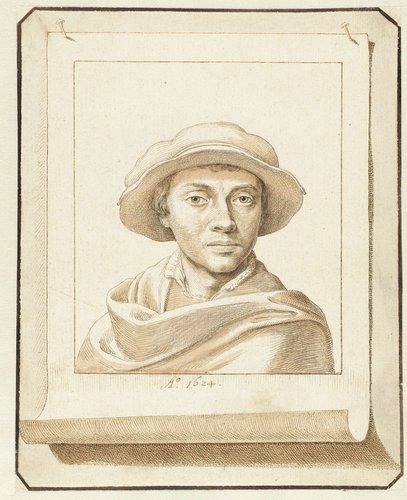
Portrait of a man
1624
Medium
pen
Dimensions
219; 175
Rights
Public Domain
About this artwork
hoogte 219 mm x breedte 175 mm
Art Historical Context
David Bailly's *Portrait of a Man* (1624) is a delicate pen drawing measuring just 219 mm high by 175 mm wide, capturing the essence of Dutch Golden Age portraiture in a compact, intimate format. Created during the early 17th century, when the Netherlands was flourishing as a center of trade and artistic innovation, this work exemplifies Bailly's skill as a Leiden-based painter and draftsman. Trained in his uncle's studio and influenced by contemporaries like Frans Hals, Bailly specialized in precise, lifelike portraits that reflected the rising merchant class's desire for personal commemoration. The use of pen—likely ink on paper—highlights Bailly's mastery of line work, allowing for intricate hatching and cross-hatching to convey texture, shadow, and subtle expression. Unlike his more famous oil paintings with vanitas motifs, this modest drawing may have served as a preparatory study or standalone piece, valued for its technical virtuosity in an era when such sketches were prized by collectors. This artwork invites us to appreciate the artistry in simplicity: a single figure rendered with economical yet evocative strokes, offering a window into the poised demeanor of 17th-century Dutch society. A testament to Bailly's enduring legacy, it reminds visitors how even small-scale works can hold profound historical resonance.