
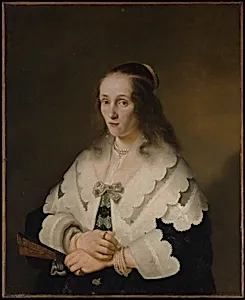
Portrait of a Woman
Ferdinand Bol, 1642
About this artwork
Ferdinand Bol's *Portrait of a Woman*1642) captures the elegance of the Dutch Golden Age a period when portraiture flourished amid economic prosperity and cultural refinement in the Netherlands. Bol, a talented pupil of Rembrandt van Rijn, trained in his master's Amsterdam workshop during the 1630s and early 1640s, techniques that elevated portrait painting to new heights of psychological depth and realism. This oil-on-canvas work, measuring 34 3/8 x 28 inches, exemplifies the era's demand for intimate, status-affirming likenesses of women from affluent circles. Rendered in the rich, luminous medium of oil on canvas—prized for its versatility in layering glazes and achieving velvety textures—Bol employs a Rembrandt-inspired chiaroscuro, contrasting light and shadow to model the sitter's features with lifelike warmth. Though the woman's identity remains unknown, her poised gaze and detailed attire reflect the cultural emphasis on virtue, piety, and domestic grace in 17th-century Dutch society, where such portraits served as family heirlooms. Now part of the Metropolitan Museum of Art's European Paintings collection, thanks to the Theodore M. Davis bequest in 1915, this piece highlights Bol's mastery in transitioning from studio assistant to independent portraitist, bridging Rembrandt's dramatic Baroque influence with a more refined classicism. Visitors will appreciate its timeless allure, inviting reflection on the lives of women in a pivotal artistic epoch.