
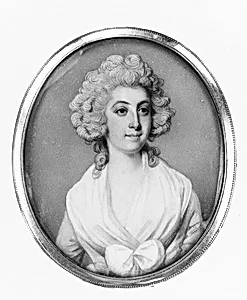
Portrait of a Woman
possibly ca. 1780
Medium
Ivory
Dimensions
Oval, 2 1/4 x 1 7/8 in. (58 x 48 mm)
Classification
Miniatures
Department
European Paintings
Museum
Metropolitan Museum of Art, New York, NY
Credit
Bequest of Margaret Crane Hurlbut, 1933
Accession Number
33.136.14
Rights
Public Domain
Tags
Art Historical Context
This delicate *Portrait of a Woman*, by British miniaturist Richard Crosse around1780, exemplifies the exquisite art of enamel painting on ivory. Measuring just 2¼ x 1⅞ inches in an oval format, this tiny jewel-like work was designed for intimate viewing—likely worn as a locket, brooch, or pendant. Crosse, active in London during the late 18th century, specialized in these luminous miniatures, capturing the refined elegance of Georgian society with meticulous detail and vibrant color. Miniatures like this one held profound cultural significance in the 1700s, serving as personal tokens of affection, remembrance, or status. Patrons commissioned them for loved ones, travelers, or as mourning pieces, blending portraiture's emotional depth with jewelry's portability. The ivory support allowed for a smooth, translucent surface that enhanced the enamel's glow, mimicking the era's oil portraits in microcosm. Though the sitter remains unidentified, her poised gaze and period attire evoke the grace of 18th-century British women. Now housed in the Metropolitan Museum of Art's European Paintings department through the 1933 bequest of Margaret Crane Hurlbut, this piece invites us to marvel at Crosse's technical mastery and the era's fascination with the miniature as both art and heirloom.