
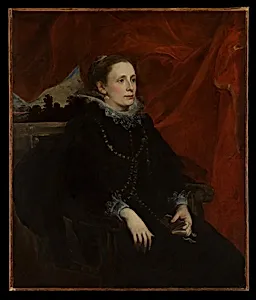
Portrait of a Woman, Called the Marchesa Durazzo
Anthony van Dyck, probably ca. 1622–25
About this artwork
Anthony van Dyck's *Portrait of a Woman, the Marchesa Dur*, painted around 1622–25, the poised elegance of early 17th-century nobility. Created in Antwerp during van Dyck's formative years—after his apprenticeship with Peter Paul Rubens—this oil on canvas exemplifies the Flemish Baroque master's emerging genius for portraiture. At just over 44 by 37 inches, the work showcases a woman, possibly the Genoese noblewoman Amalia Durazzo (though her identity remains debated), gazing confidently outward amid rich fabrics and subtle jewelry that hint at her status. Van Dyck's technique shines through his fluid brushwork, achieving luminous skin tones and atmospheric depth that set him apart from his mentor Rubens. This portrait reflects the era's fascination with individualized likenesses, blending psychological insight with idealized beauty—a hallmark of Baroque portraiture that would later define van Dyck's tenure as court painter to England's Charles I. The generous scale allows for intricate details, like the delicate lace and velvet textures, inviting viewers to appreciate the artistry in everyday opulence. Now housed in the Metropolitan Museum of Art's European Paintings department, thanks to the 1913 bequest of Benjamin Altman, this piece offers a window into the grandeur of Europe's aristocratic circles. It's a testament to van Dyck's enduring influence on portrait traditions, from Velázquez to modern photographers.