
禅師坐像|Portrait of a Zen Master
Unknown Artist
15th century
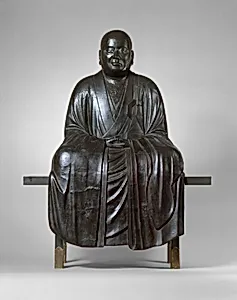
Medium
Lacquer on wood with inlaid crystal
Dimensions
Overall (figure): H. 37 3/8 (94.9 cm); W. 22 3/8 in. (56.8 cm); D. 18 1/4 in. (46.4 cm)
Classification
Sculpture
Culture & Period
Japan · Muromachi period (1392–1573)
Department
Asian Art
Museum
Metropolitan Museum of Art, New York, NY
Credit
Purchase, John D. Rockefeller 3rd Gift, 1963
Accession Number
63.65
Rights
Public Domain
Tags
Art Historical Context
This striking *Portrait of a Zen Master (禅師坐像), crafted in 15th-century Japan during the Muromachi (1392–1573), captures the serene authority of a Buddhist monk in seated meditation. Standing nearly three feet tall, this wooden sculpture exemplifies the era's devotion to Zen Buddhism, which emphasized introspection and enlightenment. Muromachi Japan saw Zen flourish under samurai patronage, influencing art, architecture, and daily rituals like the tea ceremony—making such lifelike portraits essential for temple worship and contemplation. The artwork's medium—lacquer over wood with inlaid crystal—highlights masterful Japanese craftsmanship. Urushi lacquer, derived from tree sap, provides a glossy, durable finish that protects the wood while allowing intricate detailing of the monk's robes and facial features. The crystal inlays, likely for the eyes, create a piercing, lifelike gaze that invites viewers into the master's meditative presence, a technique rooted in esoteric Buddhist traditions to evoke spiritual vitality. Acquired through the John D. Rockefeller 3rd Gift in 1963, this sculpture at the Metropolitan Museum of Art offers a window into Muromachi spirituality. Though the artist remains unknown, its realistic portraiture reflects Zen's focus on individual masters as exemplars of wisdom, bridging sculpture and devotion in a turbulent age of civil strife.