
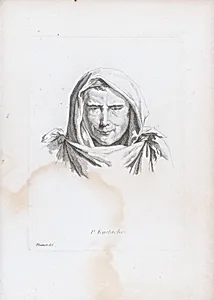
Portrait of P. Eustache
second half of 18th century
Medium
Etching
Dimensions
Sheet: 11 1/8 × 7 7/8 in. (28.3 × 20 cm) Plate: 7 5/8 × 5 7/16 in. (19.3 × 13.8 cm)
Classification
Prints|Albums
Department
Drawings and Prints
Museum
Metropolitan Museum of Art, New York, NY
Credit
Purchase, Carolyn Bullard Gift, in honor of E. John Bullard and funds from various donors, 2014
Accession Number
2014.196.1 (22)
Rights
Public Domain
Tags
Art Historical Context
Guillaume Thiemet’s *Portrait of P. Eustache* offers a glimpse into eighteenth-century printmaking traditions. Created in the second half of the 1700s as an etching, the work exemplifies the period’s growing interest in accessible portraiture. Etchings like this one allowed artists to produce multiple impressions, spreading images of individuals beyond elite circles and into broader cultural conversations. The medium’s fine lines and tonal subtleties are evident in the compact plate measuring just 7 5/8 by 5 /16 inches, which sits within a larger sheet. Such formats were often gathered into albums, reflecting how collectors valued prints as both art and documentation. Though little is recorded about the sitter, the tags identifying the subject as a male portrait suggest Thiemet captured a personal or professional likeness with the restrained elegance typical of the era. Acquired by the Metropolitan Museum of Art in 2014 through the Carolyn Bullard Gift, this etching now invites visitors to consider how portrait prints preserved identities and social connections across time.