
春屋妙葩像 自賛|Portrait of Shun'oku Myōha
ca. 1383
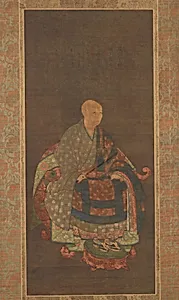
Medium
Hanging scroll; ink, color, and gold on silk
Dimensions
Image: 45 5/8 × 20 1/2 in. (115.9 × 52.1 cm) Overall: 79 × 29 3/4 in. (200.7 × 75.6 cm) Overall with knobs: 79 × 31 5/8 in. (200.7 × 80.3 cm)
Classification
Paintings
Culture & Period
Japan · Nanbokuchō period (1336–92)
Department
Asian Art
Museum
Metropolitan Museum of Art, New York, NY
Credit
Gift of Sylvan Barnet and William Burto, 2007
Accession Number
2007.329
Rights
Public Domain
Tags
Art Historical Context
This exquisite hanging scroll, titled *Portrait of Shun'oku Myōha with Self-Inscription* (ca. 1383), captures the likeness of a prominent figure from Japan's Nanbokuchō period1336–92), a time of political division between rival imperial courts amid civil strife. Created by an unidentified artist using ink, color, and on silk, the work exemplifies the refined elegance of Muromachi-era portraiture. Measuring nearly 80 inches tall, its grand scale suited temple displays or private contemplation, with luxurious gold flecks enhancing the silk's luminous surface—a technique that evoked spiritual radiance in Zen Buddhist contexts. The portrait likely features Shun'oku Myōha, a monk whose self-inscription (*jizan*) integrates poetry, blending introspection with visual artistry. Such self-portraits were rare and significant, reflecting Zen ideals of humility and enlightenment, where the subject's calligraphy often rivaled the painting itself. Hanging scrolls like this were unrolled for meditation or ceremonies, bridging art, literature, and devotion. Housed in the Metropolitan Museum of Art's Asian Art collection, this gift from Sylvan Barnet and William Burto offers a window into 14th-century Japan's cultural synthesis of portraiture and poetry, inviting visitors to ponder the monk's serene gaze amid turbulent times.