
Portret van een man
1768
Medium
ivory
Dimensions
2; 8.6; 0.9; 9.3; 8; 6.9
Rights
Public Domain
About this artwork
buitenmaat: hoogte 8,6 cm (incl. lijst) x breedte 6,9 cm (incl. lijst) x diepte 0,9 cm (incl. lijst) x hoogte 9,3 cm (doos) x breedte 8 cm (doos) x diepte 2 cm (doos)
Art Historical Context
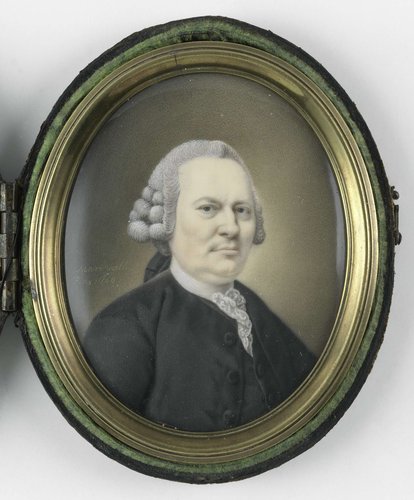
### Portrait of a Man *Joseph Marinkel, 1768, ivory, 8.6 × 6.9 × 0.9 cm (including frame); box: 9.3 × 8 × 2 cm. Rijksmuseum, Amsterdam.* Step into the refined world of 18th-century miniature portraiture with Joseph Marinkel's *Portret van een man* (Portrait of a Man), a delicate ivory artwork from 1768. Crafted as an intimate likeness, this small-scale gem—measuring just under 9 cm tall with its frame—exemplifies the era's fascination with portable, personal mementos. Housed in a protective box, it was likely designed for private devotion or as a fashionable accessory, reflecting the Enlightenment taste for elegance and sentiment among Europe's elite. Ivory, a prized medium for miniatures, allowed for luminous detail and subtle translucency, often painted with fine brushes in watercolor or gouache to capture the sitter's features with lifelike precision. Marinkel, a skilled practitioner in this Northern European tradition, contributed to a burgeoning market for such pieces in the Dutch Republic, where portraiture blended Rococo grace with emerging neoclassical poise. These works held cultural weight as symbols of status and affection, cherished in lockets, snuffboxes, or cases like the one here—evoking stories of lost loved ones or enduring bonds. Today, at the Rijksmuseum, this portrait invites us to ponder the anonymous man's gaze across centuries, a testament to artistry that shrinks grand portrait traditions into something profoundly personal.