
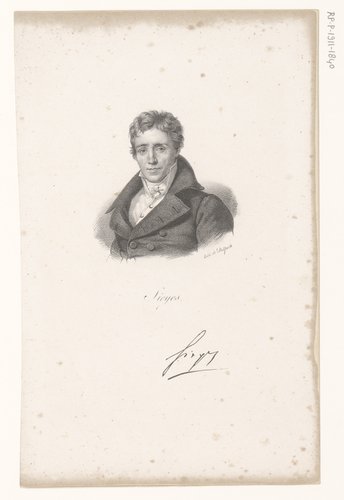
Portret van Emmanuel-Joseph Sieyès
in or after 1818 - in or before 1842
Medium
lithography
Dimensions
258; 165
Rights
Public Domain
About this artwork
blad: hoogte 258 mm x breedte 165 mm
Art Historical Context
This delicate lithograph portrait captures Emmanuel-Joseph Sieyès, the influential French abbé and statesman whose pamphlet *What Is the Third Estate?* (1789) became a rallying cry for the French Revolution. Produced anonymously by veuve Delpech (Naudet) between 1818 and 1842, it measures a modest 258 × 165 mm, ideal for personal collections or illustrated publications during France's Restoration and July Monarchy eras. Sieyès, who survived the Revolution's upheavals—including roles in the Directory and Napoleon's Consulate—remained a symbol of Enlightenment ideas on representation and power. Lithography, the medium here, revolutionized printmaking in the early 19th century. Invented around 1798, it allowed artists to draw directly on stone for nuanced, reproducible portraits at lower cost than engraving, democratizing access to notable figures. Veuve Delpech, likely the widow of Parisian lithographer François Séraphin Delpech, was part of this vibrant scene, producing affordable likenesses that preserved public memory. Though anonymous, the work reflects the period's fascination with revolutionary heroes amid political flux, offering visitors a tangible glimpse into Sieyès' enduring legacy.