
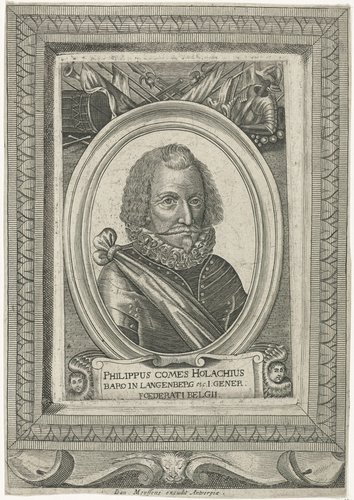
Portret van Filips graaf van Hohenlohe
1640 - 1670
Medium
engraving
Dimensions
185; 129
Rights
Public Domain
About this artwork
height 185 mm x width 129 mm
Art Historical Context
### Portrait of Philips, Count of Hohenlohe This elegant engraving, *Portret van Filips graaf van Hohenlohe*, captures the likeness of Philips, a prominent count from the noble Hohenlohe family, during the vibrant Baroque era of the mid-17th century. Created by Flemish artist Joannes Meyssens (1612–1670) between 1640 and 1670, it exemplifies the Antwerp school’s mastery of portraiture. Meyssens, a skilled engraver and publisher, produced hundreds of such prints, often commemorating European nobility and scholars, reflecting the era’s fascination with status and legacy amid the Dutch Golden Age and the Thirty Years’ War’s aftermath. As an engraving measuring 185 mm high by 129 mm wide, the work highlights the technical precision of intaglio printing—a revolutionary medium that allowed for intricate details and multiple reproductions from a single copper plate. This technique, popular in Flanders under influences like Peter Paul Rubens, democratized access to elite imagery, serving as diplomatic gifts, collector’s items, or propaganda tools. The modest scale suggests it was designed for intimate display in cabinets of curiosity or personal albums, underscoring engraving’s role in preserving aristocratic identity across Europe. Today, this portrait offers a window into 17th-century courtly culture, where visual representation reinforced power and lineage. Meyssens’ crisp lines and subtle shading invite visitors to appreciate the artistry behind historical memory.