
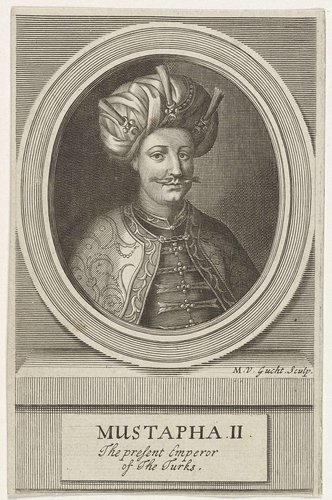
Portret van Mustafa II
1670 - 1725
Medium
engraving
Dimensions
145; 94
Rights
Public Domain
About this artwork
height 145 mm x width 94 mm
Art Historical Context
Behold the intricate *Portret van Mustafa II*, engraving by the skilled Dutch artist Michiel van der G, created sometime between 1670 and1725. This petite portrait (145 mm high by 94 mm wide) the likeness of Mustafa II, the Sultan who ruled from 1695 to 1703 during a turbulent era of European-Ottoman conflicts, including the Great Turkish War. Van der Gucht, known for his detailed reproductive prints, likely drew from existing images to bring this powerful figure to life for European audiences fascinated by the exotic East. Engraving, the medium here, was a revolutionary printmaking technique in the Baroque period. Artists like van der Gucht incised fine lines into copper plates, inking them to produce sharp, reproducible images ideal for books, collections, and propaganda. This small format suggests it was designed for intimate viewing—perhaps in a gentleman's cabinet of curiosities—allowing widespread dissemination of Mustafa's regal profile, turban, and ornate attire. Culturally, the work reflects 17th-century Europe's "Turquerie" vogue, blending admiration and curiosity about Ottoman splendor amid geopolitical tensions. A testament to engraving's role in bridging distant worlds, this piece invites us to ponder the sultan's gaze across centuries.