
Portret van Willem
Medium
engraving
Dimensions
422; 300
Rights
Public Domain
About this artwork
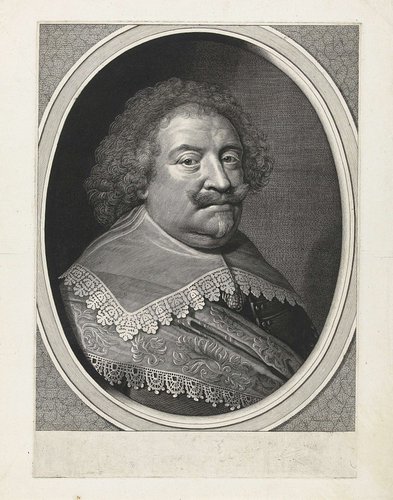
Portret van Willem, graaf van Nassau, borststuk met kanten kraag en harnas in ovale omlijsting zonder opschrift.
Art Historical Context
### Portrait of Willem, Count of Nassau Created in 1644 by Dutch engraver Willem Jacobsz Delff, *Portret van Willem* captures the noble visage of Willem, graaf van Nassau (Count of Nassau), in a striking bust-length portrait. Presented within an elegant oval frame, the sitter gazes forward with poise, adorned in a finely detailed lace collar and polished armor that evoke the grandeur of 17th-century Dutch nobility. This engraving, measuring 422 mm high by 300 mm wide, exemplifies the precision of printmaking during the Dutch Golden Age, a period when such portraits served as symbols of status and lineage. Delff, known for his meticulous reproductive engravings, employed intricate line work to render textures—from the delicate folds of lace to the reflective sheen of metal—highlighting the technical mastery of copperplate engraving. Without an inscription, the image relies purely on visual impact, making it ideal for dissemination among elites and collectors. Engravings like this were revolutionary, allowing high-quality portraits to be widely reproduced and shared, far beyond the reach of costly paintings. Historically, this work reflects the turbulent yet prosperous era of the Dutch Republic, where figures like the Counts of Nassau played pivotal roles in politics and the ongoing struggle for independence from Spain. A testament to portraiture's power in preserving legacy, it invites visitors to ponder the personal ambitions behind the armor.