
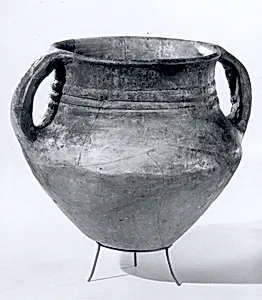
Pot
Unknown Artist
ca. 9th century BCE
Medium
Ceramic
Dimensions
7.05 in. (17.91 cm)
Classification
Ceramics-Vessels
Culture & Period
Iran · Iron Age II, Hasanlu Period IV
Department
Ancient Near Eastern Art
Museum
Metropolitan Museum of Art, New York, NY
Credit
Purchase, The Adelaide Milton de Groot Fund, in memory of the de Groot and Hawley families, 1976
Accession Number
1976.233.20
Rights
Public Domain
Art Historical Context
This modest yet evocative ceramic pot hails from ancient Iran during the Iron Age II, the Hasanlu Period IV, around the 9th century BCE. Unearthed from the rich archaeological site of Hasanlu in northwestern Iran, it offers a window into the daily lives of a pre-Achaemenid culture thriving in the rugged Zagros Mountains. Standing just 7.05 inches (17.91 cm) tall, this vessel exemplifies the practical artistry of a society transitioning into the Iron Age, where pottery served essential roles in storage, cooking, and ritual. Crafted from clay and likely fired in simple kilns, the pot reflects sophisticated ceramic techniques honed over millennia in the Ancient Near East. Its form—typical of wheel-thrown or hand-built vessels—prioritizes functionality while showcasing the potter's skill in balancing proportion and durability. Though undecorated, such pots were ubiquitous in households and reveal the cultural emphasis on communal feasting and trade in a region bridging Mesopotamia and the Caucasus. Acquired by The Metropolitan Museum of Art in 1976 through the Adelaide Milton de Groot Fund, this artifact connects us to a vibrant era of innovation and conflict, immortalizing the anonymous hands that shaped it over 3,000 years ago. A quiet testament to endurance, it invites visitors to ponder the everyday rhythms of ancient Iran.