
Pot
Unknown Artist
ca. 1635–1458 B.C.
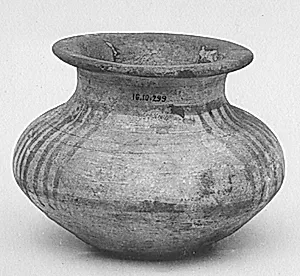
Medium
Pottery (buff), paint
Dimensions
H. 8 cm (3 1/8 in.)
Classification
Jar
Period
Second Intermediate Period–Early New Kingdom
Department
Egyptian Art
Museum
Metropolitan Museum of Art, New York, NY
Credit
Rogers Fund, 1916
Accession Number
16.10.299
Rights
Public Domain
Art Historical Context
This modest yet evocative pot, crafted around 1635–1458 B.C., hails from Egypt's Second Intermediate Period through the Early New Kingdom (Dynasties 17–18). just 8 cm tall, it exemplifies everyday pottery made from buff-colored clay, a light earthenware common in ancient Egyptian workshops. The addition of paint suggests decorative intent, perhaps simple motifs that highlighted its form, though the exact design remains a quiet mystery preserved by time. Historically, this spans a pivotal era of turmoil and triumph. The Second Intermediate Period saw foreign Hyksos rulers dominate the north, while Theban kings of Dynasty 17 rallied in the south. By early Dynasty 18, pharaohs like Ahmose expelled the invaders, ushering in the New Kingdom's golden age of empire-building and monumental art. Such pots, likely used for storage, oils, or rituals, reflect continuity in humble crafts amid grand political shifts—bridging domestic life with Egypt's resilient cultural identity. Acquired through the Rogers Fund in 1916, this piece now graces the Metropolitan Museum of Art's Egyptian Art collection, offering visitors a tangible link to ancient hands that shaped clay into vessels of utility and subtle beauty.